Julia Griffin - author



20th May 2026
To the team at ‘All in the Mind’ on Radio 4
I was interested in your discussion about the difference between the brain and the mind on yesterday’s programme, and thought you might be interested to know what we in The Erasmus Foundation think on this subject. The Foundation is a spiritual teaching and healing centre, started in 1972 and has been a charity since 1981. Each of us is a spirit that lives many lives over a long period of time to learn and evolve spiritually. I have been a student of the Erasmus Foundation since 1979.
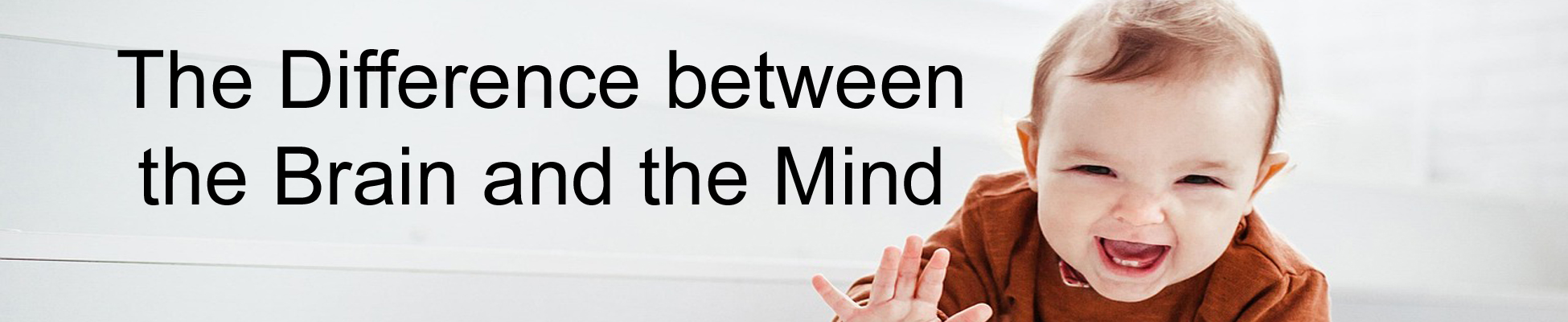
The brain is simply part of the physical body that behaves very similarly to our computers in that what is put in is stored as memory, to be retrieved as and when required. Information is stored in the brain from a very young age to allow you to function, such as walking, talking, using your hands, eyes, ears, and voice. For example, a baby crawls because the brain has not yet learned to instruct the body to walk with its legs, but as the child develops and with practice, the movement improves, leading to better coordination among the different parts of the body.
The mind is quite different. It is your spirit, but while the spirit is living a life in a physical body, the mind learns to work with the brain, both feeding information into the brain and using the brain to function either from some new instruction or from a memory stored in the brain from previous learning. Creativity comes from the mind, and it is the mind that then works with the brain to learn, improve, and carry out whatever creative path is chosen.
But we are all living a Tapestry of Life, a framework for a particular life, and if the Tapestry includes a creative streak, then it is important for a person to be creative in some way, otherwise they might feel that there is something missing in their life and will perhaps not feel as fulfilled as they could be. The Tapestry will therefore also influence how the brain has the potential to function; for example, if you are tapestried to be a top mathematician, then the brain would have the ability to function well as the person studies this subject. If you are tapestried to be a ballerina, then your body would be appropriate for this creativity and activity.
If a person wants to draw on some knowledge and wisdom from the mind, or find answers to a problem, help with a decision, or look to understand themselves better, then quietening the brain through meditation is a good way to find clarity and peace, which will come from the mind. Very often, answers are helpful and meaningful, but you will always feel more peaceful. Again, this is something that gets easier with practice. The mind, the eternal part of ourselves, contains the memory and knowledge of all our spiritual existence, perhaps over millions of years, but on the Earth, held within a physical body, the mind is overshadowed by the brain, which inhibits its full use. Some people, rare, on the Earth, have access to their memory, an ‘open mind’, enabling them to access this information, but for the rest of us the only thing we can do to surface the mind more, is by closing down the activity of the brain during a meditation.
So it is the mind that creates thought. Before anything can happen, a thought is generated from the mind. The thoughts from the brain are stimulated by memory; it cannot create thought because it is simply a computer of stored information that helps the physical body function. It also reacts to pain and other stimuli, connected through the nervous system, designed to feel these things.
The person who sent in the question about near-death experiences, which prompted his question to your programme, was describing a friend who left their body and was looking down at their body. This was their spirit that was looking down at their body. The tunnel they described and the bright light is what you see and where you would go when your life is complete (when you die), and it is time to leave your body, and we would say, return Home, a place that is solid, peaceful, and purposeful.
I hope the above is of interest. If you would like more information or have any questions, I, or others in the Erasmus Foundation, would be happy to answer them.